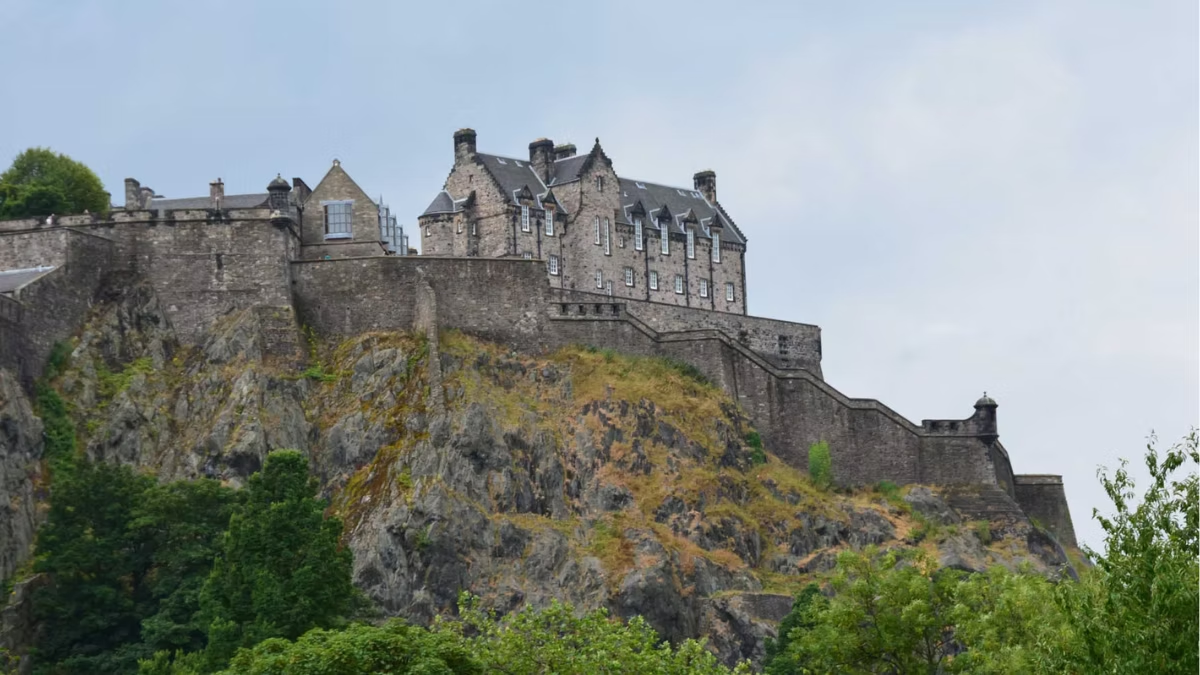
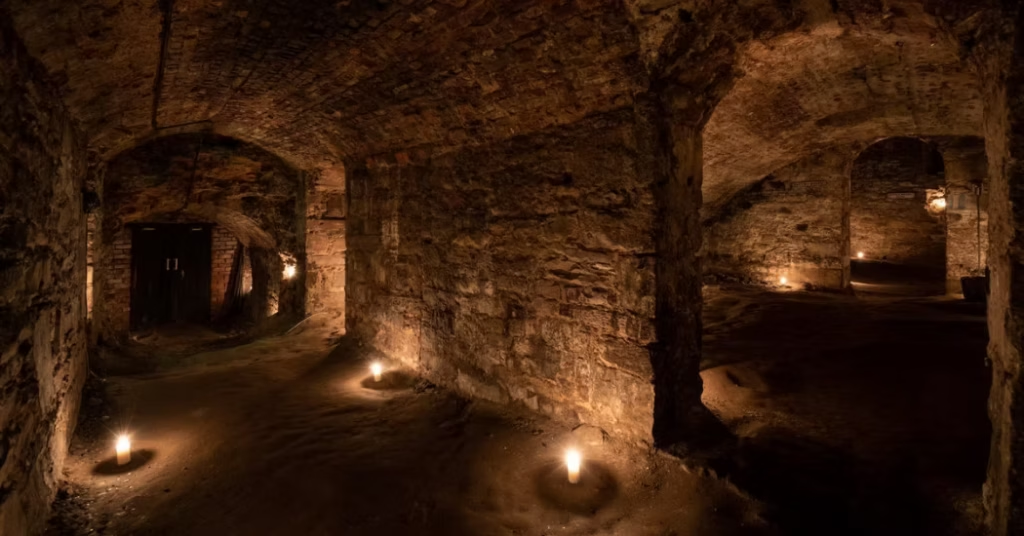
In 2001, a team of researchers sent 240 volunteers into Edinburgh Castle’s vaults. None knew the castle’s ghost stories. None were told which rooms had been reported as haunted for centuries. Over the course of 10 days, more than half reported unexplained experiences — cold spots, shadow figures, the feeling of being watched, even a shared sighting of a man in a leather apron gliding through a doorway.
The eeriest finding? Their reports clustered in the very rooms that had been considered haunted for hundreds of years.
Edinburgh Castle’s ghost stories aren’t just folklore spun for tour groups. They’re rooted in 900 years of sieges, betrayals, witch burnings, and imprisonment that left marks — some visible, some not — on every corner of this fortress. Here’s what haunts the castle, the real history behind each story, and where you can find the evidence yourself.
Edinburgh Castle is widely regarded as the most haunted place in Scotland.
Famous ghosts include the Headless Drummer (first seen 1650), the Lost Piper Boy, the Grey Lady (Janet Douglas, burned 1537), a phantom dog in the pet cemetery, and spirits of Napoleonic prisoners in the vaults.
A 2001 scientific study with 240 volunteers found unexplained phenomena concentrated in historically haunted rooms.A 120-minute in-depth guided tour (£52) spends the most time in the dungeons and vaults where ghost activity is most reported.
The Ghosts of Edinburgh Castle
Staff, visitors, and even construction workers have reported encounters at Edinburgh Castle stretching back centuries. These are the six most persistent apparitions.
The Headless Drummer
The most ominous ghost was first spotted in 1650, drumming a warning on the castle battlements just before Oliver Cromwell’s forces attacked Edinburgh. Sentries saw a young figure playing an old Scottish war tune. Then an English march. Then a French rhythm. When one fired his musket, the figure vanished.
The drummer’s identity remains unknown, but the timing was no coincidence — he appeared in the same year Charles I was beheaded and Cromwell’s army swept into Scotland. Since then, the headless drummer has been considered a harbinger of attack. The drum’s faint “rat-a-tat-tat” is still reportedly heard after the castle closes for the night.
Where to listen: The battlements and Argyle Battery, especially at dusk.
The Lost Piper Boy
When tunnels were discovered beneath Edinburgh Castle — thought to be an escape route running beneath the Royal Mile toward Holyrood Palace — the opening was too small for an adult. A boy was sent down with his bagpipes, instructed to play as he walked so soldiers above could track his progress.
Halfway down the Royal Mile, the pipes went silent. A search party was sent in. No trace of the boy was ever found. The entrance was bricked up. To this day, visitors and residents along the Royal Mile report hearing faint pipe music from beneath the cobblestones, usually late at night.
Where to listen: Below the Royal Mile between the castle and Holyrood — locals say the sound is strongest near the Tron Kirk.
The Grey Lady — Janet Douglas, Lady Glamis
This is the castle’s most tragic ghost, and the one with the most detailed historical record. Janet Douglas was a Scottish noblewoman whose only real crime was her surname. Her brother, the Earl of Angus, had imprisoned the young King James V during his childhood. When James came of age, he turned his hatred on the entire Douglas clan.
Janet was falsely accused of plotting to poison the king and of witchcraft. When no evidence could be found, James had her servants and family tortured until they gave false testimony. On 17 July 1537, nearly blind from her imprisonment in the castle dungeons, Janet was burned alive on Castle Hill. Her 16-year-old son was forced to watch. Her husband died the next day, attempting to escape by scaling the castle walls.
Her ghost — a weeping grey figure — has been seen moving through the castle’s older corridors ever since. She also reportedly haunts Glamis Castle, where a chapel seat is still reserved for her.
Where to look: The older castle corridors and Royal Palace area, particularly in the evening.
The Dung Cart Prisoner
One of the more grim stories involves a desperate prisoner who hid inside a wheelbarrow full of manure, hoping to be carted out of the castle gates and dumped on a soft heap outside. Instead, the wheelbarrow was tipped over the battlements onto the jagged slopes of Castle Rock. He didn’t survive the fall.
Visitors near the south wall have reported feeling pushed from behind — and more than a few have noticed a sudden, unmistakable smell of manure with no obvious source.
Where it happens: The battlements and south wall, near the Long Stairs.
The Ghost Dog
Near Mons Meg, the castle’s pet cemetery holds the graves of regimental mascots and soldiers’ dogs dating back to the 1840s. Small headstones mark about 20 burials. A scruffy black dog has been spotted wandering through this area on multiple occasions — searching, it seems, for an owner who isn’t there. If you’ve read the story of Greyfriars Bobby, Edinburgh’s famous loyal dog, the parallel is hard to miss. You can see the pet cemetery headstones on the walk between Mons Meg and the castle highlights of the upper ward.
Where to look: The pet cemetery, viewable from the path near Mons Meg.
The Napoleonic Prisoners
Edinburgh Castle held prisoners of war for centuries — French, Spanish, American, and Dutch soldiers crammed into the dark vaults beneath Crown Square. Conditions were brutal. Graffiti carved by prisoners is still visible on the wooden vault doors today — names, dates, and desperate messages scratched into the timber.
In 2003, construction workers restoring the Queen Anne building reported being harassed by unseen forces. Several refused to work alone. Photographs taken in the vaults showed blue orbs floating above the workers’ heads. Whether you believe in orbs or not, it’s worth noting that the workers had no interest in ghost stories — they just wanted to finish the job.
Where to see evidence: The Prisons of War exhibition — check the carved graffiti on the vault doors.
A guided tour brings these stories to life in the actual locations where they happened. The Guided Walking Tour with Entry Ticket (£37) covers the key haunted spots and includes free time to explore the vaults on your own.
The Dark History Behind the Hauntings
Ghost stories don’t appear from nowhere. The reason Edinburgh Castle has so many is straightforward: for nearly a thousand years, it was a site of executions, betrayals, and suffering. Three events in particular left the deepest scars. For the full 3,000-year history of Edinburgh Castle, see our dedicated history page.
The Black Dinner (1440)
On 24 November 1440, the 16-year-old William Douglas, 6th Earl of Douglas, and his younger brother David accepted an invitation to dine with the 10-year-old King James II at Edinburgh Castle. The meal was a trap, orchestrated by rival nobles who feared the Douglas clan’s growing power.
According to legend, partway through the feast, a severed black bull’s head — a symbol of death — was placed before the Douglas brothers. Despite the young king’s tearful protests, both boys were dragged out to Castle Hill, given a mock trial, and beheaded.
If this sounds familiar, it should. George R.R. Martin confirmed the Black Dinner as one of the inspirations for the Red Wedding in Game of Thrones. The banquet is believed to have taken place in David’s Tower, which no longer stands — but you’ll walk through its foundations in the lower castle.
The Witch Burnings (1479–1722)
More accused witches were burned at Castle Hill than at any other site in Scotland. An estimated 300 or more people — mostly women — were executed for witchcraft on what is now the Castle Esplanade between 1479 and 1722. Janet Douglas was the most prominent victim, but she was far from alone.
Victims were often herbalists, the mentally ill, or simply people who’d made enemies in the wrong places. Today, the Witches’ Well — a small bronze memorial fountain designed by John Duncan in 1894 — is mounted on the esplanade wall near the castle entrance. Most visitors walk straight past it. Look for the twin heads (one “wicked,” one “serene”), the entwined serpent, and the dates 1479 and 1722 in Roman numerals. It’s free and outside the castle walls.
Centuries of Prisoners
From the medieval period through the Napoleonic Wars, Edinburgh Castle’s vaults served as a military prison. French, Spanish, American, and Dutch soldiers were crammed into damp, dark chambers beneath Crown Square. In 1811, 49 French prisoners hacked their way through the south wall and used ropes to scale down the crag — the escape hole is reportedly still visible in the castle wall today. For more on what it was like inside, see our guide to the castle’s prisons and vaults.
The 2001 Scientific Ghost Study
Edinburgh Castle’s hauntings aren’t just anecdotal. In 2001, Dr Richard Wiseman of the University of Hertfordshire conducted one of the world’s largest paranormal investigations at the castle, as part of the Edinburgh International Science Festival.
The setup was rigorous. 240 volunteers — all screened to ensure they had no prior knowledge of the castle’s ghost stories — were taken through vaults, cellars, and dungeons in small groups over 10 days. Some rooms had long-standing reputations for ghost activity; others were “control” rooms with no history of sightings. The team used thermal imagers, geomagnetic sensors, temperature probes, and night vision equipment.
The results: 51% of participants reported unexplained experiences. These included sudden temperature drops, the feeling of being touched or watched, shadow figures, and in one case, an entire group independently describing the same apparition — a man in old-fashioned clothing wearing a leather apron, gliding down a tunnel.
The key finding: the majority of paranormal reports came from rooms with pre-existing haunted reputations, despite volunteers knowing nothing about which rooms were “haunted.” Dr. Wiseman, a self-described sceptic, called this correlation “very intriguing” but attributed many experiences to environmental factors like air movement and room size. The results were published in the British Journal of Psychology in 2003.
Whether you believe the study proves ghosts exist or simply proves humans are suggestible in dark, cold spaces, it’s a compelling reason to pay closer attention in the castle’s vaults.
Where to Find the Ghosts: A Haunted Map of the Castle
If you want to trace the haunted history yourself, here’s a location-by-location guide. Pair it with the castle map and walking route for the most efficient path through the spookiest spots.
HAUNTED LOCATIONS: What You Can Still See
• Esplanade (before you enter): The Witches’ Well memorial on the wall — free, easy to miss, right side facing the castle. Marks the witch burning site (1479–1722).
• Battlements / Argyle Battery: Headless Drummer sightings. Best at dusk. Also where the Dung Cart Prisoner reportedly pushes visitors.
• Pet Cemetery (near Mons Meg): Small headstones dating to the 1840s. Ghost dog sightings. Look down from the path above.
• Prisons of War Vaults (beneath Crown Square): Most haunted area. Napoleonic prisoner graffiti on vault doors. Blue orbs reported in photographs. The 2001 study’s strongest results came from these rooms.
• Older Corridors / Royal Palace Area: Grey Lady sightings. The area around where Janet Douglas would have been imprisoned.
• Below the Royal Mile (outside the castle): Faint pipe music from the Lost Piper Boy. Not inside the castle, but part of the castle’s legend.
Ghost Tours and Haunted Experiences
Standard guided tours of Edinburgh Castle cover the major ghost stories alongside broader castle history. If the dark history is your main interest, the 120-Minute In-Depth Tour (£52) spends the most time in the dungeons and vaults where ghost activity concentrates.
For dedicated ghost experiences, Edinburgh offers excellent evening walking tours (Mercat Tours, City of the Dead) that cover the castle exterior, Grassmarket, the Blair Street Underground Vaults, and Mary King’s Close. These are separate from castle entry but are worth combining — a daytime castle visit followed by an evening ghost tour makes for a full day of Edinburgh’s dark side.
The best time to visit for atmosphere is late afternoon in autumn or winter, when the light fades early and the crowds thin. Quieter days mean emptier vaults — and a more convincing argument that those footsteps you’re hearing aren’t coming from other visitors.
Frequently Asked Questions
Is Edinburgh Castle really haunted?
Edinburgh Castle is widely considered the most haunted place in Scotland and was named by TIME magazine as one of the most haunted sites in the world. Hundreds of reports span centuries — from staff, visitors, and even construction workers. A 2001 scientific study with 240 volunteers found that 51% reported unexplained phenomena, with sightings concentrated in rooms with long-standing haunted reputations.
What ghosts haunt Edinburgh Castle?
The most reported ghosts include: the Headless Drummer (a harbinger of attack first seen in 1650), the Lost Piper Boy (who vanished in tunnels beneath the castle), the Grey Lady / Janet Douglas (burned at the stake in 1537), a phantom black dog in the pet cemetery, the Dung Cart Prisoner (who haunts the south battlements), and Napoleonic prisoner spirits in the vaults.
What is the most haunted part of Edinburgh Castle?
The Prisons of War vaults beneath Crown Square are the most reported haunted area. This is where the 2001 scientific study recorded the highest concentration of unexplained experiences, and where construction workers in 2003 reported being harassed by unseen forces. The carved prisoner graffiti on the vault doors adds to the atmosphere.
What is the Black Dinner at Edinburgh Castle?
The Black Dinner took place on 24 November 1440 when the 16-year-old Earl of Douglas and his younger brother were invited to dine with the child King James II. During the feast, a black bull’s head (a death symbol) was placed before them. Both brothers were dragged outside and beheaded despite the king’s protests. George R.R. Martin confirmed this event as an inspiration for the Red Wedding in Game of Thrones.
Were witches burned at Edinburgh Castle?
Yes. More accused witches were burned at the Castle Esplanade than at any other site in Scotland, between 1479 and 1722. An estimated 300+ people were executed. The most famous victim was Janet Douglas, Lady Glamis, burned on 17 July 1537 on false charges of witchcraft and poisoning. The Witches’ Well memorial (1894) on the esplanade wall marks the site — it’s free to see and outside the castle entrance.
Can you do a ghost tour of Edinburgh Castle?
There isn’t a dedicated ghost-only tour inside the castle, but all guided tours cover the major ghost stories alongside castle history. The 120-Minute In-Depth Tour (£52) spends the most time in the haunted vaults. For evening ghost tours, Edinburgh companies like Mercat Tours and City of the Dead run excellent walking tours of the city’s haunted underground.
What did the 2001 Edinburgh Castle ghost study find?
Dr Richard Wiseman’s 2001 study involved 240 volunteers with no prior knowledge of the castle’s ghost stories. Over 10 days, 51% reported unexplained experiences including temperature drops, being touched, shadow figures, and shared apparitions. Reports clustered in rooms with long-standing haunted reputations. The findings were published in the British Journal of Psychology (2003). Dr Wiseman, a sceptic, could not fully explain the correlation.
Is Edinburgh Castle worth visiting for the ghost history?
Absolutely — even sceptics find the dark history compelling. The Prisons of War exhibition with its prisoner graffiti, the pet cemetery, and the Witches’ Well are all tangible, visible reminders of the castle’s violent past. A guided tour adds storytelling that plaques can’t match. See our full guide to whether Edinburgh Castle is worth visiting.
The Stories the Stones Hold
Edinburgh Castle’s ghosts aren’t decorative legends added for tourists. They’re echoes of real people — a falsely accused noblewoman burned alive, a boy sent into a tunnel who never came back, prisoners who carved their names into wooden doors knowing they might never leave. Whether you believe in ghosts or not, walking through the vaults where these events happened hits differently when you know the stories.
