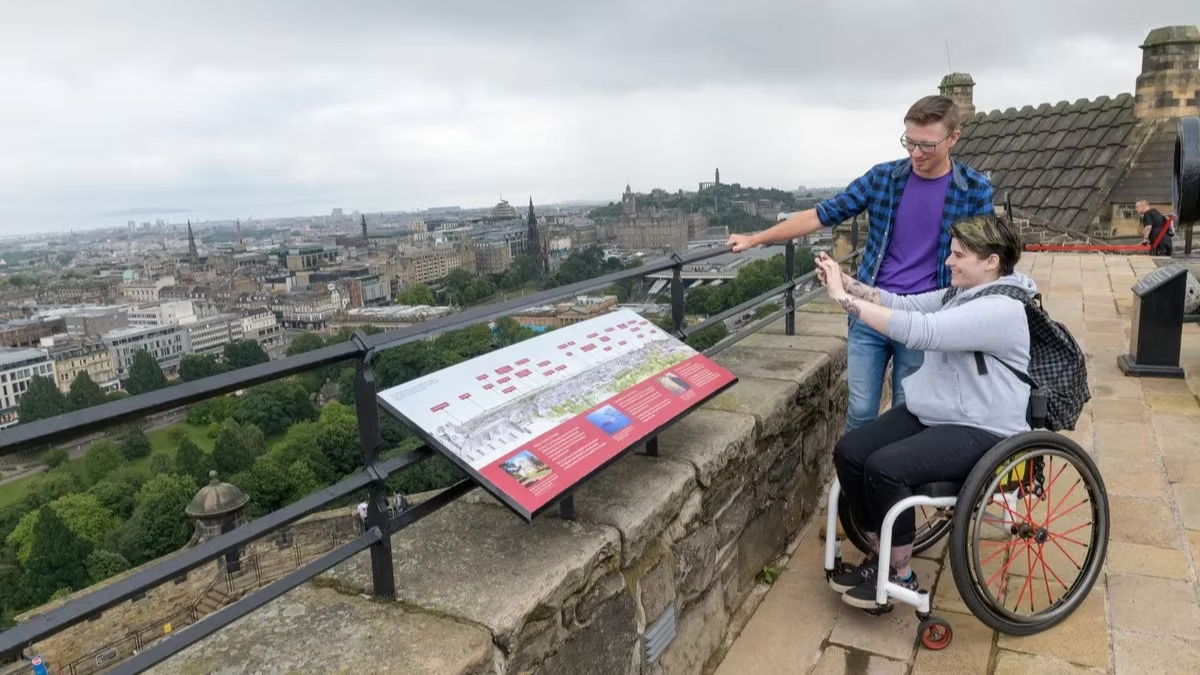
Edinburgh Castle sits on a volcanic rock. The path from entrance to summit is 350 metres of cobblestones, with gradients reaching 15 degrees at the steepest point. None of that screams “wheelchair friendly.”
But here’s what most people don’t realise: a free mobility vehicle runs from the entrance to Crown Square, key buildings have ramped or lift access, carers enter free, and sensory backpacks are available for autistic visitors. Far more of the castle is accessible than the medieval exterior suggests.
This guide covers exactly what’s accessible, what isn’t, how to get there, and what support is available — organised by the type of access you need.
Most of Edinburgh Castle is wheelchair accessible via a free mobility vehicle from the entrance to Crown Square. The Great Hall and National War Memorial have ramped access. Cobbled surfaces throughout. Carers enter free (up to two per disabled visitor). Sensory backpacks and ear defenders available for autistic visitors. Book accessible parking on the esplanade in advance. For specific access queries, call the dedicated access line: +44(0)131 310 5114.
A guided walking tour with entry ticket (£37) handles the route planning for you → Book Guided Tour
Wheelchair & Mobility Access at Edinburgh Castle
The castle is built across three levels of an extinct volcanic plug. The main cobbled path from entrance to Crown Square covers roughly 350 metres with an average gradient of 5 degrees — rising to 15 degrees at the steepest section through Foog’s Gate. Cobbles are uneven throughout, and they’re the biggest challenge for wheelchair users.
That said, the castle has made significant effort to improve access. Here’s exactly what to expect.
The Mobility Vehicle
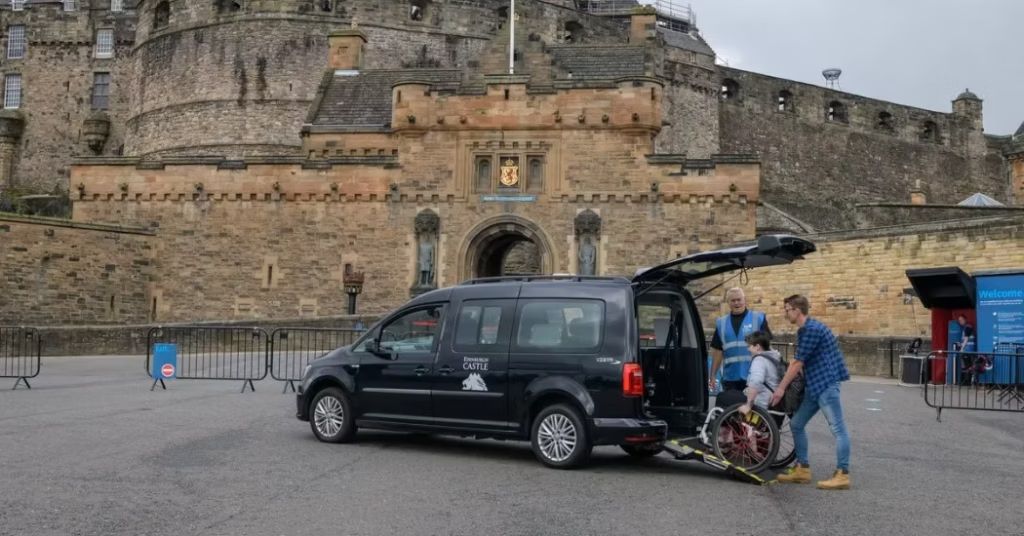
A free motorised vehicle runs from the castle entrance to Crown Square (the upper castle area). Request it from staff as you enter. It carries up to three passengers plus one wheelchair user. The vehicle accommodates wheelchairs and mobility aids with maximum dimensions of 103cm high, 73.5cm wide, 100cm long, and a weight limit of 150kg.
One important timing note: the vehicle doesn’t operate between 12:15pm and 1:15pm due to the firing of the One O’Clock Gun. If you’re entering the castle around midday, expect longer wait times for the 12:30pm and 1pm entry slots.
Wheelchair Hire
Several manual wheelchairs are available to borrow free of charge at the entrance, on a first-come, first-served basis. You can’t reserve them in advance, so arrive early if you’re relying on this.
What IS Accessible
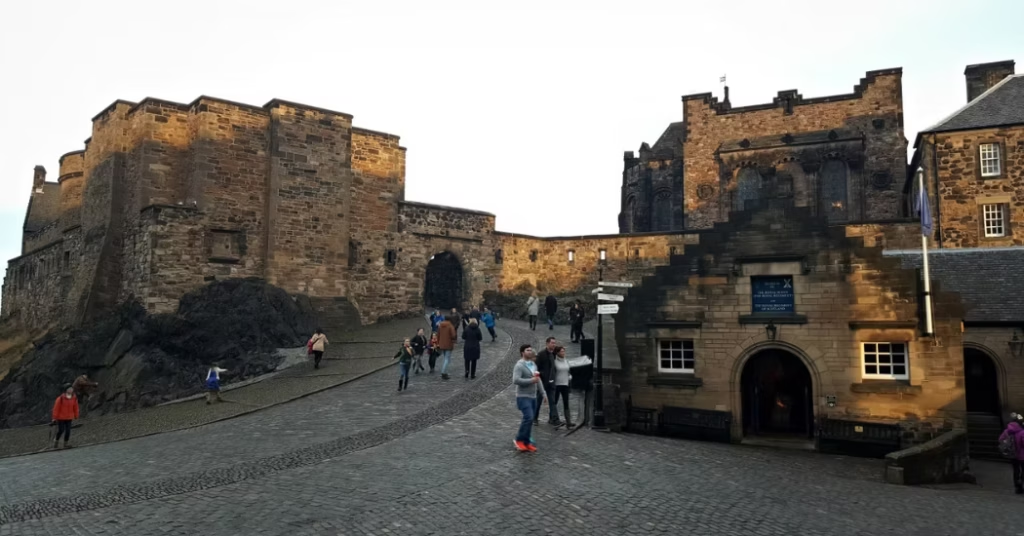
Once at Crown Square (via the mobility vehicle or the cobbled path), you can access the castle’s most important buildings:
Great Hall: Ramped access. The hall itself is level inside, with James IV’s spectacular 1511 hammerbeam ceiling and displays of arms and armour. This is one of the castle’s top highlights.
National War Memorial: Ramped access. Level interior. No photography permitted inside.
Crown Square: Large, level, paved area — the most accessible part of the castle. Accessible toilet nearby (corridor between Great Hall and Crown Gift Shop, near the lift).
Redcoat Café: Step-free access. Located in the Middle Ward.
Argyle Battery and One O’Clock Gun: Level areas, though surfaces are cobbled. The panoramic views north across Princes Street Gardens and the New Town are worth the bumpy ride. The One O’Clock Gun fires daily at 1pm (except Sundays, Good Friday, and Christmas Day) — be prepared for a sudden loud noise.
Royal Palace (Honours of Scotland): There is a short flight of stone steps with handrails at both entry and exit. A lift has been noted by visitors for accessing the Crown Jewels — ask staff for assistance. Note: the Crown Room is temporarily closed until April 2026 for refurbishment [VERIFY reopening date].
What is NOT Accessible
Some areas involve steps and cannot be reached by wheelchair:
Prisons of War: Located in vaults below Crown Square, accessed via numerous short flights of steps with handrails on both sides. Not wheelchair accessible. See our Prisons of War guide for what’s inside.
Lang Stairs: 70 stone steps connecting the Middle and Upper Ward. Not accessible. The standard exit from the upper castle is via these stairs — staff can guide you back down through the castle via an alternative route if stairs aren’t suitable.
Western Defences: Involves many steps to enter, explore, and exit.
St Margaret’s Chapel: Has a small ramp, but the door is only 810mm wide, which may not accommodate all wheelchairs. Worth checking if your chair fits.
Hospital Square: Reached via a 12-degree cobbled ramp. Possible in a powered wheelchair; challenging for manual chair users.
Power wheelchair users generally manage the castle much better than manual wheelchair users. If you’re in a manual chair, you’ll need a strong companion for the cobbled gradients. The mobility vehicle eliminates the hardest climb.
For a detailed breakdown of the castle’s three-ward layout and what you’ll encounter at each level, see our castle map and walking route guide.
Getting to Edinburgh Castle with Accessibility Needs
Accessible Parking
A small number of Blue Badge parking spaces are available on the Castle Esplanade, directly in front of the entrance. Book in advance by emailing ecparking@hes.scot or calling +44(0)131 310 5114. These spaces are limited or unavailable from May to October due to the Edinburgh Military Tattoo stadium construction.
The nearest car park is NCP Castle Terrace, which has 5 accessible bays on a first-come, first-served basis. However, Castle Terrace sits below the castle, so you’ll face an uphill journey to the entrance — manageable in a powered wheelchair, tough for manual users.
Taxis can drop passengers on the esplanade (except June–September when it’s closed to traffic for Tattoo preparations).
By Public Transport
The nearest train station is Edinburgh Waverley. It’s close on a map but sits at the bottom of the hill. I’d recommend taking an accessible taxi from the station rank directly up to the castle — it’s a short ride and saves a steep uphill push.
If you prefer to wheel or walk from Waverley, the least steep route goes: exit via the lifts toward Waverley Market, turn right onto Princes Street, right onto North Bridge, right onto High Street, then up to the castle. It’s circuitous but minimises the gradient. Avoid Cockburn Street — it’s seriously steep.
The hop-on hop-off bus (£18) is another option — all buses are wheelchair accessible with ramps and two designated wheelchair spaces, and there’s a stop near the castle. See our hop-on hop-off guide for details.
For full transport options including walking routes and parking, see our getting to Edinburgh Castle guide.
Sensory & Autism Support
Edinburgh Castle offers several resources for visitors with sensory processing needs or autism:
Sensory backpacks: Free to borrow from the ticket office. Each backpack contains ear plugs, tactile toys, sunglasses, binoculars, a wind-up torch, a sand timer, and a sensory map. Excellent for both children and adults who benefit from sensory regulation tools.
Ear defenders: Adult and children’s sizes available in limited numbers. Ask a member of staff when your ticket is scanned.
Visual stories: Downloadable PDF guides for adults and children, showing what to expect through photos of staff, castle spaces, and facilities. Download these before your visit so there are no surprises on arrival.
Sensory map: Available in the backpack or downloadable to your own device.
The One O’Clock Gun fires daily at 1 pm (except Sundays, Good Friday, and Christmas Day). It’s a sudden, very loud noise that startles even visitors who are expecting it. If you or someone in your group is sensitive to unexpected sounds, either plan to be away from the gun area at 1 pm or use ear defenders. The gun doesn’t fire on Sundays if you’d prefer to avoid it entirely.
Visual & Hearing Impairment Access
Visual Impairment
Audio guides are available in 12 languages, using push-button handsets or your own mobile phone. The audio guide is free for blind and partially sighted visitors — ask at the audio booth just past the Portcullis Gate where your ticket is scanned.
Print versions of the audio guide are available in large print and Open Dyslexic large print. These can also be downloaded to your own device. Braille signage has been noted at the Crown Jewels exhibit.
Assistance dogs and guide dogs are permitted throughout the castle, including all roofed areas. Dogs must be kept on a lead at all times.
Hearing Impairment
Induction loops are available at ticket desks and in some exhibition spaces [VERIFY current availability]. Sign language interpretation may be available for pre-booked group tours — contact the castle directly to arrange this in advance. Many interpretive panels throughout the castle use clear visual elements alongside text.
For the most current information on hearing and visual support, contact the dedicated access line: +44(0)131 310 5114.
Accessible Facilities Inside the Castle
Accessible toilets: Available near the entrance and in Crown Square (corridor between Great Hall and Crown Gift Shop, near the lift). Note: the entrance toilets are under refurbishment until spring 2026 — temporary accessible units are on the esplanade [VERIFY reopening].
Dining: The Redcoat Café in the Middle Ward has step-free access. Tea Rooms are in Crown Square.
Gift shops: The entrance shop (Old Guard Room) and Crown Square shop both have wide aisles and are generally accessible.
Luggage: Suitcases and bags over 30 litres are not permitted inside the castle. There is no luggage storage facility, and pushchairs/prams cannot be stored. Plan accordingly.
Carer & Companion Entry
Edinburgh Castle provides free entry for up to two accompanying carers per disabled visitor. You can add carer tickets during online booking or request them at the ticket office.
Disabled visitors pay the standard admission rate for their category (adult, child, or concession). Proof of disability is not required.
For full pricing, discounts, and booking options, see our complete Edinburgh Castle tickets guide.
Tips for an Accessible Visit
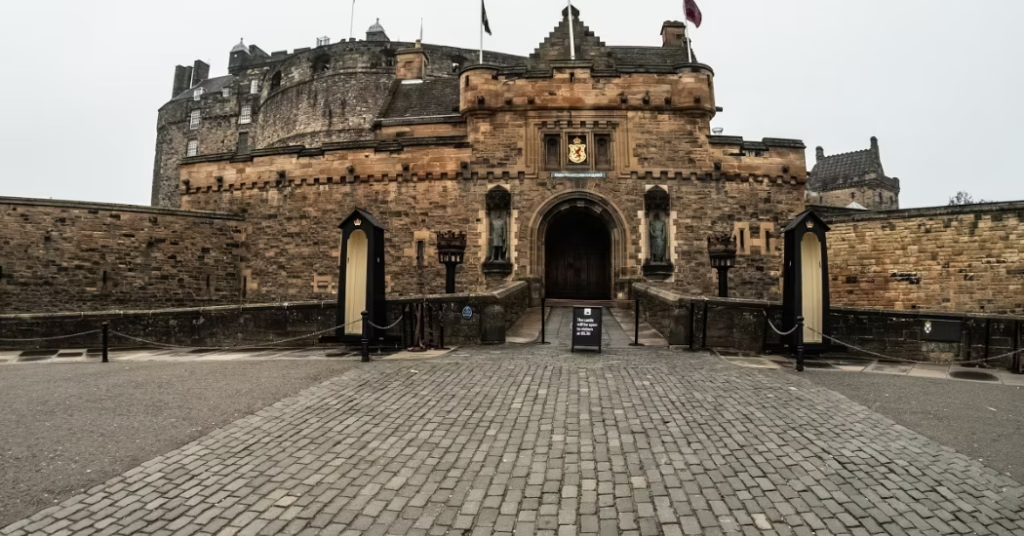
Book accessible parking early. Esplanade Blue Badge spaces are limited and must be booked in advance. They’re not available at all from May to October during Tattoo season.
Arrive at opening (9:30am). The mobility vehicle can have wait times, especially around the midday gun break (12:15–1:15pm). Early arrival means shorter waits and thinner crowds.
Request the mobility vehicle immediately. Ask staff at the entrance as soon as you arrive. This saves the entire cobbled climb to Crown Square.
Allow 2–3 hours minimum. Accessible routes may take longer. Give yourself time to enjoy the castle without rushing.
Download resources before you visit. The sensory map and visual stories (for autistic visitors) are available as PDFs on the official castle website. Having them on your phone means one less thing to arrange on arrival.
Sturdy shoes matter even in a wheelchair. If you’re transferring between wheelchair and seats, or walking short distances on cobbles, proper footwear makes a real difference.
For more general visitor tips and advice on visiting with kids (including pushchair guidance), see our dedicated guides.
Frequently Asked Questions
Is Edinburgh Castle wheelchair accessible?
Yes — most of the castle is wheelchair accessible, though it’s challenging due to cobbled surfaces and gradients up to 15 degrees. A free mobility vehicle transports visitors from the entrance to Crown Square. Key buildings including the Great Hall and National War Memorial have ramped access. Some areas (Prisons of War, Lang Stairs, Western Defences) involve steps and are not accessible.
Is there a mobility vehicle at Edinburgh Castle?
Yes. A free motorised vehicle runs from the castle entrance to Crown Square, carrying up to three passengers plus one wheelchair user. It accommodates wheelchairs with maximum dimensions of 103cm high, 73.5cm wide, 100cm long, and 150kg weight. The service pauses between 12:15pm and 1:15pm for the One O’Clock Gun.
Do carers get free entry to Edinburgh Castle?
Yes. Up to two accompanying carers per disabled visitor enter free. Add carer tickets when booking online or at the ticket office. Proof of disability is not required.
Is Edinburgh Castle accessible for pushchairs?
Pushchairs can navigate many of the same routes as wheelchairs, though cobbles make it bumpy. The mobility vehicle can assist families. Some exhibitions have limited space — be prepared to fold pushchairs. There is no pushchair storage facility at the castle.
Where is accessible parking at Edinburgh Castle?
Blue Badge parking spaces are available on the Castle Esplanade (book via ecparking@hes.scot or +44(0)131 310 5114). Spaces are limited or unavailable May–October due to Military Tattoo construction. NCP Castle Terrace has 5 accessible bays on a first-come, first-served basis.
Can I hire a wheelchair at Edinburgh Castle?
Yes. Several manual wheelchairs are available free of charge at the entrance, on a first-come, first-served basis. You can’t reserve one in advance, so arrive early if you need one.
What areas of Edinburgh Castle are NOT wheelchair accessible?
The Prisons of War (numerous steps), Lang Stairs (70 stone steps), Western Defences (many steps, closed until March 2026), and parts of Hospital Square (12-degree cobbled ramp) are not fully wheelchair accessible. St Margaret’s Chapel has an 810mm-wide door that may not accommodate all wheelchairs.
Does Edinburgh Castle have sensory aids for autistic visitors?
Yes. Sensory backpacks are free to borrow from the ticket office — they include ear plugs, tactile toys, sunglasses, binoculars, a wind-up torch, a sand timer, and a sensory map. Ear defenders are also available. Visual stories (PDF guides showing what to expect) can be downloaded before your visit.
Plan Your Accessible Visit
Edinburgh Castle requires more planning than most attractions if you have accessibility needs — but the payoff is worth it. The mobility vehicle, ramped access to key buildings, sensory support, and free carer entry mean most visitors with disabilities can experience the castle’s highlights, from the Crown Jewels and Great Hall to the panoramic views across Edinburgh.
Call the dedicated access line (+44(0)131 310 5114) before your visit for personalised advice. And read our full Edinburgh Castle history guide to discover the 3,000 years of stories waiting inside.
