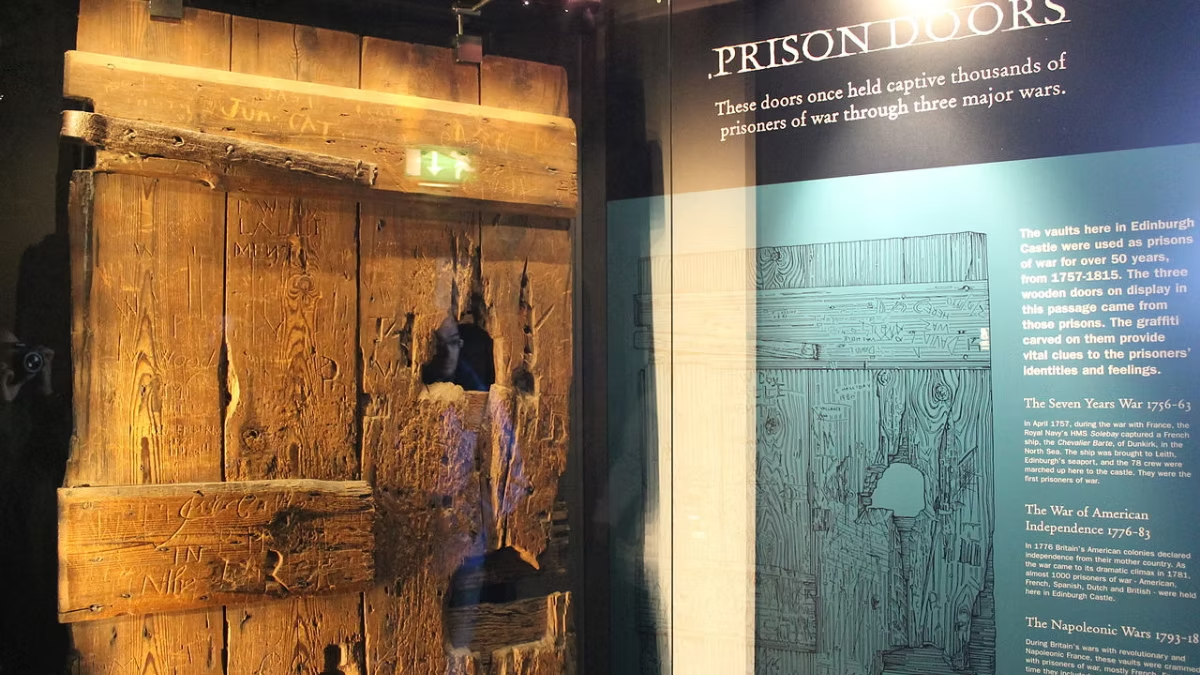
The youngest prisoner held in Edinburgh Castle’s prisons was six years old, captured at the Battle of Trafalgar in 1805. He was one of over a thousand men — sailors, soldiers, and at least twenty-one Caribbean pirates — who passed through the stone vaults beneath Crown Square between 1757 and 1814. The Prisons of War exhibition is one of the most atmospheric corners of the castle, and the graffiti scratched into the wooden doors by desperate hands is an unexpectedly personal connection to people who suffered here centuries ago.
Edinburgh Castle Prisons
Edinburgh Castle has two prisons open to visitors. The Prisons of War exhibition (vaults beneath Crown Square, used 1757–1814) held international prisoners from the Seven Years War, American Revolution, and Napoleonic Wars. The Victorian Military Prison (1842) held garrison soldiers in solitary confinement cells. Both are included with standard admission.
Look for: the prisoner graffiti on wooden doors — including one of the earliest depictions of the American Stars and Stripes flag, carved around 1780.
The 120-Minute In-Depth Tour (£52) spends the most time in this area
Who Was Held Prisoner at Edinburgh Castle?
The castle’s 3,000-year history (https://edinburghcastle-tickets.co/history/) includes four distinct eras of imprisonment, each bringing a different kind of captive through its gates.
Caribbean Pirates (1720)
Before the vaults ever held prisoners of war, they held pirates. In 1720, twenty-one crew members connected to the notorious Bartholomew “Black Bart” Roberts were captured in Argyll while abandoning their ship, The Eagle. The local laird who boarded it found the hold full of gold.
The men were transported to Edinburgh Castle and held for a six-month trial. Twelve were found guilty. Two — John Clark and John Stewart — were hanged at Leith Sands on 14 December 1720, their bodies left dangling in chains between the high and low water marks as a warning to anyone considering the pirate life.
Seven Years War and American Revolution (1757–1783)
The first prisoners of war arrived in 1758 — French privateers captured early in the Seven Years War. By the time the American Revolution broke out, the vaults held hundreds of sailors from France, America, Spain, the Netherlands, Ireland, Italy, Denmark, and Poland. Most were ordinary seamen. Their officers, meanwhile, lived “on parole” in private Edinburgh lodgings — a sharp class divide that extended even to captivity.
Napoleonic Wars (1793–1814)
The Napoleonic Wars brought the worst overcrowding. At peak capacity, over a thousand prisoners were crammed into vaults designed for far fewer — roughly one square metre per person. Conditions were grim. The youngest prisoner, captured at Trafalgar in 1805, was just six years old. In March 1811, 450 prisoners from the closed Esk Mills depot were transferred here, pushing the castle to breaking point. One month later, the Great Escape would end the castle’s career as a prison.
Life Inside the Vaults
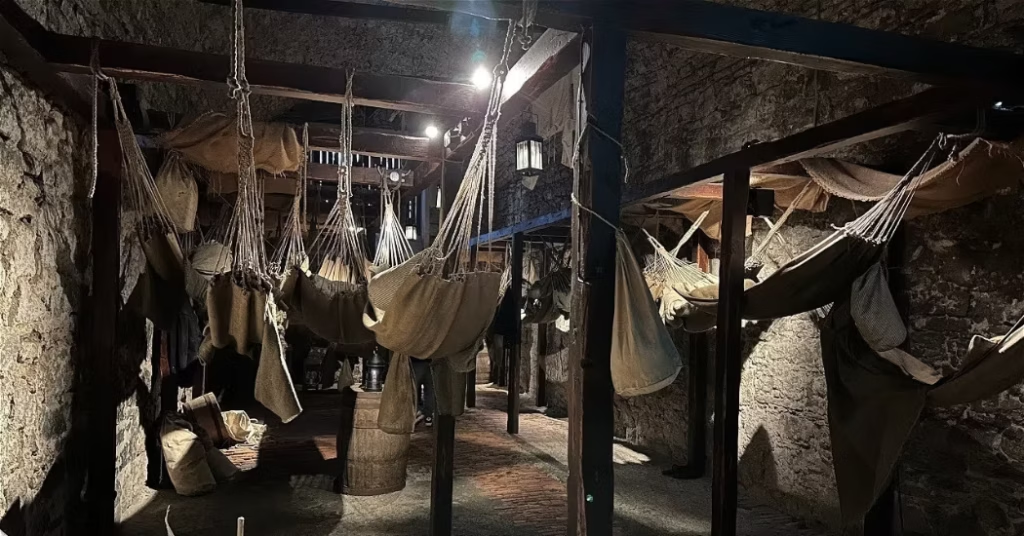
The vaults sit beneath Crown Square, underneath the Great Hall and Queen Anne Building. They’re exactly what you’d expect from a medieval castle repurposed as a prison: cramped, dimly lit, cold, and damp. Prison reformer John Howard inspected them in 1779 and described the conditions as “miserable holes” barely fit for habitation [VERIFY exact Howard quote wording against original 1779 source].
Prisoners slept in hammocks hung from raftered frames, stacked close together in the low-ceilinged stone chambers. Each man received a daily allowance of 6d plus rations: two pints of beer, bread, beef, cabbage, butter, and cheese on Saturdays. French prisoners received an extra penny per day and were given new clothes — a small distinction that mattered in those conditions.
To fight the boredom that was as crushing as the cold, prisoners turned to craftsmanship. Using bones saved from their meat rations, along with straw, wood, and scraps of fabric, they made hats, wooden boxes, board games, chess sets, and extraordinarily detailed model ships. They sold these to the Edinburgh public daily between 10am and 3:30pm. One bone model of the HMS St George, made by French prisoners around 1760, was sold to the Duke of Atholl and survives today in Historic Environment Scotland’s collections.
What You Can Still See
• Reconstructed vaults with hammocks, rations, and living conditions circa 1800
• Original George III fireplace grate bearing the royal cypher
• Hammock frames and bed frames from the 18th century
• Audio recordings recreating prisoner conversations and daily routines
The Graffiti on the Doors
The most personal traces the prisoners left behind are scratched into the wooden vault doors. These aren’t idle doodles. They’re ships, names, dates, political statements, and raw frustration carved into oak over decades of captivity.
The door into vault 4 is covered almost entirely in ships — three-masted men-of-war, brigs, brigantines, and smaller cutters popular with privateers. Vault 5’s door is more revealing: a hangman’s gibbet with a body dangling from it, dated 1781, alongside a depiction of Lord North — the British Prime Minister at the time — on the scaffold.But the most significant carving is the Stars and Stripes. Scratched into a door panel around 1780 by an American prisoner during the War of Independence, it shows the early American flag flying from the stern of a two-masted ship. It’s believed to be one of the earliest depictions of the Stars and Stripes outside North America. The doors are now preserved behind glass but remain clearly visible.
The Great Escape of 1811
On 12 April 1811, forty-nine French prisoners pulled off the most audacious escape in the castle’s history. They hacked through the south wall at a section known as the Devil’s Elbow and used ropes to lower themselves down the sheer face of Castle Rock.
All but one made it down safely — the exception broke his leg in the descent. But freedom was short-lived: every last man was recaptured. The episode destroyed the castle’s reputation as a secure facility. By 1814, it had ceased operating as a prisoner-of-war prison entirely.
The escape hole in the south wall is still visible today. The 120-minute in-depth tour (£52) (https://edinburghcastle-tickets.co/guided-tours/) points out the exact spot from the southern ramparts — a detail easy to miss on a self-guided visit.
The Victorian Military Prison
Separate from the POW vaults, the Military Prison was built in 1840–42 in the castle’s southwest corner near Dury’s Battery. It followed the “separate system” pioneered at Pentonville Prison in London — solitary confinement in individual cells, believed at the time to encourage rehabilitation through silent reflection.
Originally twelve cells on two floors around a central open hall, later expanded to sixteen with separate ablution facilities. This wasn’t for enemy combatants — it held garrison soldiers who’d broken military rules. Drunkenness, desertion, and disobedience could land you in a cold stone cell with hard labour. During World War I, it held “Red Clydesiders” including the political activist John Maclean. The prison closed in 1923 when the garrison relocated to Redford Barracks.
Today, two cells have been refurnished to show conditions from the 1840s and 1880s. It’s easy to miss — look for it near the entrance to the Prisons of War exhibition.
Visiting the Prisons of War Exhibition
Location: Beneath Crown Square, accessed via stairs near the Great Hall. Sometimes referred to as the castle “dungeons” on visitor sites, though they’re technically vaults.
Included with admission: No extra charge beyond your Edinburgh Castle ticket (https://edinburghcastle-tickets.co/tickets/). Both the Prisons of War and Military Prison are covered.
Time needed: Allow 20–30 minutes minimum. Longer if you read all the panels and listen to the audio recordings recreating prisoner conversations.
What to look for: The reconstructed living conditions, the graffiti doors behind glass (look for the Stars and Stripes on the vault 5 door panel), the original George III fireplace grate, and the audio recreations of prisoner life.
Atmosphere note: The exhibition is dimly lit and atmospheric. It can feel intense for young children — age 8 and up is generally fine. Check our accessibility guide (https://edinburghcastle-tickets.co/accessibility/) for details on stair access.
Tip: Visit after exploring Crown Square and the Great Hall — the vaults are directly underneath. Combine with the National War Museum in the same area, then follow our self-guided walking route (https://edinburghcastle-tickets.co/map-layout/) to connect the rest of the castle.
Frequently Asked Questions
What are the prisons at Edinburgh Castle?
Edinburgh Castle has two separate prisons. The Prisons of War vaults beneath Crown Square held international prisoners from 1757 to 1814 during three major wars. The Victorian Military Prison (1842–1923) held garrison soldiers in solitary confinement cells. Both are open to visitors and included with standard admission.
Can you see the prison vaults at Edinburgh Castle?
Yes. The Prisons of War exhibition is open to all ticket holders and accessed via stairs near the Great Hall in Crown Square. The reconstructed vaults, prisoner graffiti, and audio recordings are all included at no extra cost.
Were there pirates at Edinburgh Castle?
Yes. In 1720, twenty-one crew members connected to the pirate Bartholomew “Black Bart” Roberts were imprisoned at Edinburgh Castle after being captured in Argyll. Their ship, The Eagle, was found with a hold full of gold. Twelve were convicted, and two were hanged at Leith Sands.
What is the Stars and Stripes graffiti at Edinburgh Castle?
Carved into a wooden vault door around 1780 by an American prisoner during the War of Independence, it’s believed to be one of the earliest depictions of the American flag outside North America. The door is preserved behind glass in the Prisons of War exhibition.
Did prisoners escape from Edinburgh Castle?
Several escape attempts are recorded, but the most dramatic was on 12 April 1811 when forty-nine French prisoners hacked through the south wall and used ropes to descend Castle Rock. All were recaptured, but the escape effectively ended the castle’s use as a prison by 1814. The escape hole is still visible.
What did prisoners of war make at Edinburgh Castle?
Prisoners crafted items from mutton bones, straw, and wood — including intricate model ships, hats, board games, and chess sets. They sold these to the Edinburgh public daily between 10am and 3:30pm. Some bone ship models survive in museum collections today.
Is the Prisons of War exhibition worth visiting?
Absolutely — it’s one of the most atmospheric parts of Edinburgh Castle. The reconstructed conditions, original graffiti, and audio recreations bring the prisoners’ stories to life in a way that few castle exhibits manage. Allow 20–30 minutes. For the deepest experience, the 120-minute in-depth tour (£52) (https://edinburghcastle-tickets.co/guided-tours/) covers the vault stories in detail.
Where are the vaults at Edinburgh Castle?
The Prisons of War vaults are beneath Crown Square, directly underneath the Great Hall and Queen Anne Building. Access is via stairs near the Great Hall. The Military Prison is nearby in the southwest corner, close to Dury’s Battery.
The Stories Scratched Into Stone
The Edinburgh Castle prisons won’t be the first thing on most visitors’ lists. The Crown Jewels, the Great Hall, and the panoramic views rightly get top billing. But the vaults are where the castle feels most human. The graffiti on those doors — ships drawn by homesick sailors, a flag carved by an American revolutionary, a hangman’s gibbet dated 1781 — connects you to individual people in a way that polished exhibits rarely manage.
Spend the time here. Read the panels. Listen to the audio. And if you want the stories behind the castle’s highlights (https://edinburghcastle-tickets.co/highlights/) brought to life, a guided walking tour is the best way to make sure you don’t walk past the details that matter.
