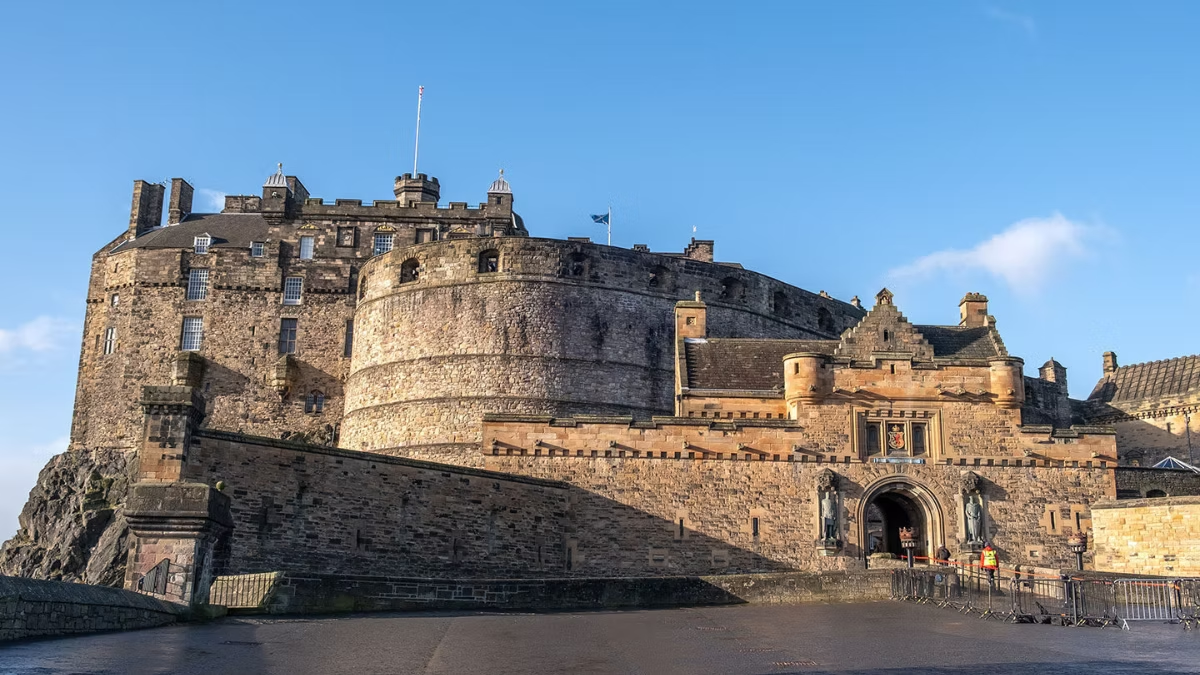
Edinburgh Castle covers far more ground than it looks from below. The complex is built across three distinct levels on a volcanic plug, connected by 350 metres of cobbled path that climbs from the gatehouse to Crown Square at the summit. Most visitors wander uphill without a plan, queue for the Crown Jewels at peak time, and miss half the highlights on the way back down. This Edinburgh castle map guide breaks down the layout, gives you two self-guided routes (a scenic one and a crowd-beating one), and tells you exactly how long to spend at each stop.
Edinburgh Castle is built across three wards (Lower, Middle, Upper) on Castle Rock. The main route from entrance to Crown Square is 350m of uphill cobbled path. Allow 2–3 hours for highlights, 3–4 for a comprehensive visit. A free orientation map is available at the entrance, and an audio guide costs £3.50 (12 languages). For an expert-led route with entry included, book a Guided Walking Tour with Entry Ticket (£37).
Understanding the Edinburgh Castle Layout
Before you start walking, it helps to understand how the castle is structured. Edinburgh Castle isn’t one building — it’s a complex of fortifications, palaces, museums, and chapels spread across three main areas. The entire site sits on top of Castle Rock, an extinct volcanic plug that rises 130 metres above sea level.
Lower Ward: The Entrance
You enter through the 19th-century gatehouse, a 10-foot-wide opening flanked by statues of Robert the Bruce and William Wallace. Immediately inside, the ticket office sits to your right, with the main castle shop (the Old Guard Room) just beyond. The path leads uphill to the Portcullis Gate, a Renaissance gateway dating from 1573 with the original portcullis spikes still visible above.
Middle Ward: The Heart of the Fortress
Beyond the Portcullis Gate, the Middle Ward opens up as the largest space inside the castle. A broad cobbled road curves left and uphill past the Argyle Battery (panoramic north-facing views across Princes Street Gardens and the New Town), Mill’s Mount Battery (home of the One O’Clock Gun), the Redcoat Café, Hospital Square, and the National War Museum.
Upper Ward: The Summit
The steepest section of the route leads through Foog’s Gate (15-degree gradient — the maximum incline in the castle) to the Upper Ward. This is where the most significant attractions cluster: Crown Square houses the Royal Palace (with the Honours of Scotland), the Great Hall, and the Scottish National War Memorial. Above Crown Square, the summit of Castle Rock holds St Margaret’s Chapel (Edinburgh’s oldest building, c.1130) and the six-tonne cannon Mons Meg. The Half Moon Battery provides dramatic east-facing views down Princes Street toward Calton Hill.
Self-Guided Walking Route: The Scenic Route
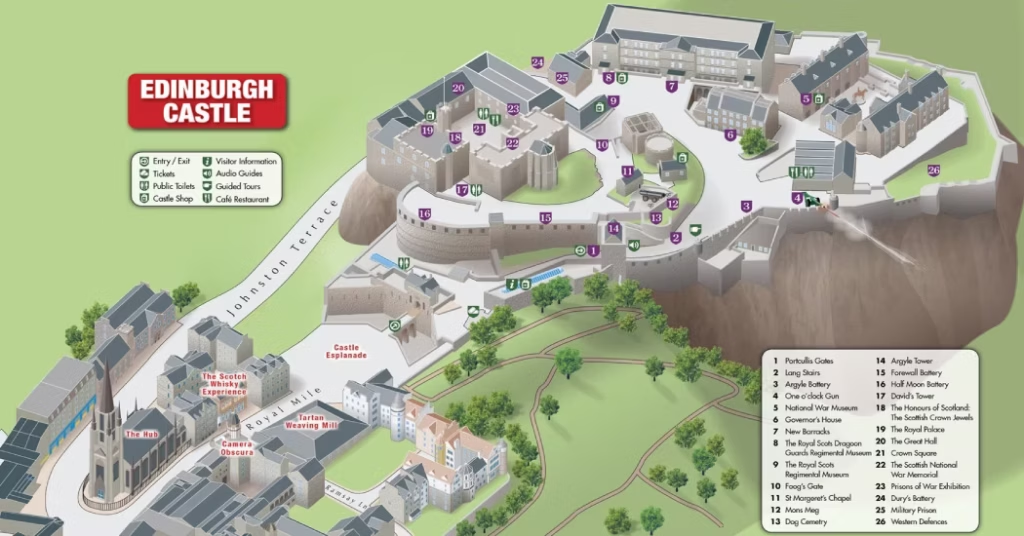
This is the natural route that follows the cobbled path uphill. It builds chronologically and saves Crown Square — the castle’s centrepiece — for the climax of your visit. Each stop includes an approximate time so you can plan your day.
Stop 1: Esplanade & Gatehouse (5 minutes)
Before entering, take in the Esplanade. This open parade ground is the site of the Edinburgh Military Tattoo each August. Look for the Witches’ Well fountain on the wall near the entrance — it commemorates the thousands of accused witches executed here between the 15th and 18th centuries. Pass through the gatehouse between Bruce and Wallace.
Stop 2: Portcullis Gate & Lower Ward (5 minutes)
Collect your audio guide at the booth just past the Portcullis Gate (£3.50, or use your own phone). The gate itself is worth a look up — the iron portcullis spikes above date from the original 1573 gateway. The Victorian-era Argyle Tower above was added in 1887. Pick up the free orientation map here if you didn’t get one at the ticket office. Continue uphill through the main path. For full ticket options and booking, see our tickets guide.
Stop 3: Argyle Battery (10–15 minutes)
The six-gun battery built in 1703 provides the widest panoramic view inside the castle. You’re looking north across Princes Street Gardens, the Georgian terraces of the New Town, and on a clear day all the way to the Firth of Forth and the Fife coastline beyond. This is also one of the castle’s best photo spots — morning light is ideal from here.
Stop 4: One O’Clock Gun at Mill’s Mount Battery (5–10 minutes)
Just beyond the Argyle Battery, Mill’s Mount Battery is home to Edinburgh’s most famous daily tradition. The One O’Clock Gun has fired at 1pm every day except Sundays, Good Friday, and Christmas Day since 1861. If you’re visiting around midday, arrive by 12:45pm for a good viewing spot. The gun is loud — you’ll hear it anywhere in the city.
Stop 5: Hospital Square & National War Museum (15–30 minutes)
Continue past the Redcoat Café (good stop for coffee or a hot meal) to Hospital Square. The National War Museum here covers 400 years of Scottish military history, from Highland broadswords to personal items from modern conflicts. It’s included with your entry ticket and often overlooked. See all the highlights in our castle highlights guide.
Stop 6: Western Defences (10–15 minutes)
When open, this area offers panoramic south-west views across the Grassmarket, Arthur’s Seat, and the Pentland Hills. The angled fortifications were designed to strengthen the castle’s defences. Access involves numerous steps at both entry and exit.
Stop 7: Foog’s Gate to the Upper Ward (5 minutes)
The cobbled path steepens to its maximum 15-degree gradient as you pass through Foog’s Gate (the name’s origin is uncertain — possibly from “foggy gate”, referring to Edinburgh’s sea fogs). Large stone cisterns nearby were built to reduce the castle’s dependency on its 34-metre-deep well. You’re now entering the oldest and most important part of the fortress.
Stop 8: Prisons of War (15–20 minutes)
In the vaults below Crown Square, hundreds of prisoners were held between the 1750s and 1814 — French privateers, American sailors captured during the War of Independence, and crews from across Europe. The reconstructed vaults show the cramped conditions. Look for the ship graffiti scratched into cell doors and what’s believed to be the earliest depiction of the American Stars and Stripes in Scotland, carved by a captured sailor. Full details in our Prisons & Vaults guide.
Stop 9: Crown Square (45–60 minutes)
The Royal Palace on the east side houses the Honours of Scotland — the Crown, Sceptre, and Sword of State, the oldest crown jewels in Britain. Allow 20–30 minutes, longer in summer when queues build. The Great Hall opposite is a stunning space completed in 1511 for James IV, with a hammerbeam roof and displays of arms and armour. The Scottish National War Memorial on the north side is a deeply moving space commemorating Scotland’s war dead — no photography is permitted inside.
Stop 10: St Margaret’s Chapel & Mons Meg (10–15 minutes)
At the summit, St Margaret’s Chapel is Edinburgh’s oldest surviving building, dating from around 1130. The tiny Romanesque interior with its original arches is easy to miss but worth stepping inside. Just outside, the six-tonne siege gun Mons Meg sits on the ramparts — given to James II in 1457, it could fire a 150kg gunstone nearly two miles. A small pet cemetery below the battlements holds the graves of soldiers’ regimental mascots. For the full story, see our castle history guide.
Stop 11: Half Moon Battery & the Descent (10 minutes)
Walk east along the ramparts to the Half Moon Battery, built after the devastating Lang Siege of 1571–73. The curved wall with its embrasures frames views east down Princes Street toward Calton Hill and the Balmoral clock tower. From here, you can descend via the Lang Stairs (70 steep steps) for the most direct route back down, or retrace the cobbled path for a gentler descent.
Total time for the scenic route: approximately 2.5–3.5 hours depending on museum time.
PREFER A GUIDE?
A Guided Walking Tour with Entry Ticket (£37) follows this route with an expert guide who brings the history to life. After the 1.5-hour guided portion, you get free time to explore museums and buildings at your own pace. Compare all guided tour options →
The Crowd-Beating Route: Crown Jewels First
If you’re visiting during peak season (May–September) or on a busy weekend, this reverse strategy can save you 30+ minutes of queuing at the Honours of Scotland. Instead of following the scenic path, take the Lang Stairs immediately after the Portcullis Gate. The 70 steps are the original castle entrance and take you directly to Crown Square. When gates open at 9:30am, most visitors drift along the cobbled road and stop at the Argyle Battery views. Meanwhile, you’re already at the Crown Jewels.
The order: Lang Stairs → Honours of Scotland → Great Hall → War Memorial → St Margaret’s Chapel → Mons Meg → descend via Foog’s Gate → Prisons of War → National War Museum → One O’Clock Gun (time for 1pm) → Argyle Battery panorama → exit.
By the time you reach the Middle Ward on your way out, most of the crowds are heading up. You get the panoramic views with fewer people in your photos. This strategy works best if you arrive at opening time. For a month-by-month breakdown of when the castle is busiest, check our best time to visit guide.
How Long to Spend at Edinburgh Castle
Your ideal visit length depends on how deeply you want to explore. The castle’s audio guide alone contains over 6 hours of content, so there’s no shortage of material. Here’s a realistic breakdown. For a more detailed analysis, see our how long to spend guide.
Quick Highlights (1–1.5 hours): Argyle Battery views, Crown Jewels, Great Hall, St Margaret’s Chapel, Mons Meg. Best for time-pressed visitors — an Express Guided Tour with Entry (£35) covers the highlights in 45 minutes with expert commentary.
Standard Visit (2–3 hours): Everything above plus National War Museum, Prisons of War, One O’Clock Gun, Half Moon Battery. This is what most visitors need.
Deep Dive (3–4+ hours): All exhibitions, audio guide, military prison, and time to absorb the atmosphere. A 120-Minute In-Depth Tour (£52) is ideal if you want expert context for a thorough exploration.
Important: There is no re-entry. Once you leave the castle, you cannot return on the same ticket.
Practical Tips for Navigating the Castle
The entire castle is cobbled with uneven surfaces and uphill walking. Wear sturdy, comfortable shoes — heels and sandals are a bad idea. The free orientation map at the entrance is helpful, but this written route gives you what the map doesn’t: a recommended order and timing. The audio guide (£3.50) is available in 12 languages at the booth just past the Portcullis Gate, or you can load it on your own phone. For our full visitor tips, see the dedicated guide.
Accessibility: The main cobbled path to Crown Square is wheelchair-passable (maximum 15% gradient at Foog’s Gate), and the Great Hall and War Memorial have ramped access. However, the Prisons of War involve numerous steps with handrails, and the Lang Stairs are not accessible. Wheelchair hire is available. Full details in our accessibility guide.
Facilities: Toilet facilities near the entrance are under refurbishment until spring 2026 — temporary accessible facilities are available on the esplanade. The Redcoat Café is in the Middle Ward (step-free access); the Tea Rooms are in Crown Square. No luggage or large backpacks are permitted inside.
Frequently Asked Questions
What is the best route around Edinburgh Castle?
The standard scenic route follows the cobbled path uphill through the three wards: Lower Ward (gatehouse, Portcullis Gate), Middle Ward (Argyle Battery panorama, One O’Clock Gun, National War Museum), and Upper Ward (Crown Square with Crown Jewels, Great Hall, St Margaret’s Chapel, Mons Meg). During peak season, consider the crowd-beating route: take the Lang Stairs directly to Crown Square first, then explore downhill.
How long does it take to walk around Edinburgh Castle?
Most visitors spend 2–3 hours covering the main highlights. A quick visit takes 1–1.5 hours, while a comprehensive exploration with all museums and audio guide takes 3–4 hours. The audio guide contains over 6 hours of content. There is no re-entry, so plan to see everything in one visit.
Is Edinburgh Castle steep to walk around?
Yes. The castle is built on a volcanic plug and the main path climbs 350 metres from entrance to summit. The average gradient is 5 degrees, with the steepest section at Foog’s Gate reaching 15 degrees. All surfaces are cobbled. The Lang Stairs are 70 steps. Sturdy shoes are essential.
Can you do Edinburgh Castle self-guided?
Yes — most visitors explore self-guided using the free orientation map and optional audio guide (£3.50, 12 languages). The castle is laid out so you can follow the path naturally from entrance to summit. If you’d prefer expert storytelling, a Guided Walking Tour with Entry Ticket (£37) includes a 1.5-hour guided portion plus free time afterward.
Is there a free map of Edinburgh Castle?
Yes. A free orientation map is available at the ticket office and information desk when you enter. It shows all three ward areas, major attractions, facilities (toilets, cafés, shops), and accessibility information. A downloadable PDF version is also available on the official Edinburgh Castle website.
What should I see first at Edinburgh Castle?
It depends on your strategy. On the scenic route, your first major stop is the Argyle Battery (panoramic views). On the crowd-beating route, head straight up the Lang Stairs to Crown Square to see the Honours of Scotland (Crown Jewels) before queues build — this is recommended during summer and weekends when wait times can exceed 30 minutes by mid-morning.
Navigate Edinburgh Castle Like a Local
Edinburgh Castle rewards visitors who arrive with a plan. Whether you follow the scenic route and let the 3,000 years of history build as you climb, or rush to the Crown Jewels first and explore the haunted corners on the way down, knowing the three-ward layout means you’ll see everything that makes this Scotland’s most visited attraction.
